
Not sure where to start with pet urns for dogs? This guide covers sizing, materials, and what Harris County families actually need to know before choosing.
Introduction
You're not in a headspace to comparison shop. You're grieving, you're exhausted, and someone is asking you to make a decision about an urn. That's a hard place to be, and it's okay if you don't have all the answers right now.
What we can do is make this simpler. This guide covers what Harris County families actually ask when they're choosing pet urns for dogs — sizing, materials, what to do with the ashes, and how to find something that feels right for your dog, not just any dog. You don't have to figure this out alone.
Pet Urns for Ashes: Materials, Sizes, and What to Actually Look For
Most people start with the wrong question. They ask "which urn looks nice?" before they've figured out whether it's the right size. Getting the size wrong is the one mistake that's genuinely hard to recover from — and it happens more often than you'd think.
The standard rule is simple: one pound of your dog's body weight equals roughly one cubic inch of urn capacity. A 40-pound Labrador needs at least 40 cubic inches. Add 10 to 20 cubic inches as a buffer, because decorative urns sometimes have less usable interior space than their listed dimensions suggest. When in doubt, go slightly larger. You can always fill extra space — you can't undo a container that's too small.
Material is the next decision, and it's more personal than technical. Wood urns feel warm and traditional. Ceramic and glass options tend to be more artistic and visually distinctive. Metal alloy urns are durable and understated. Marble and stone hold up well over time and carry a certain weight — literally and emotionally. There's no wrong choice here. The right material is the one that fits where you plan to keep it and what feels like your dog.
How to Choose the Right Urn Size for Your Dog
Size is the practical part, but it still trips people up — especially when they're grieving and trying to make a decision quickly. Here's how to think through it without overcomplicating things.
Small urns, typically in the 10 to 25 cubic inch range, work well for dogs under 25 pounds — think Chihuahuas, Dachshunds, French Bulldogs, or small mixed breeds. These are also a good option if you're planning to divide the ashes among family members, since a smaller keepsake can hold a portion while the rest goes elsewhere.
Medium urns, somewhere between 25 and 65 cubic inches, cover most mid-size dogs — Beagles, Cocker Spaniels, Border Collies, and dogs in the 25 to 60-pound range. Large urns start around 65 cubic inches and go well above 100 for bigger breeds like German Shepherds, Golden Retrievers, and Labrador Retrievers. Giant breeds — Great Danes, Saint Bernards, Mastiffs — may need 120 cubic inches or more.
One thing worth knowing: the amount of ash returned doesn't always match exactly what you'd expect from the formula. Bone density, age, and the cremation process itself can all affect the final volume. That's why the buffer matters. If your dog was 55 pounds and you're looking at a 55 cubic inch urn, size up. The peace of mind is worth it.
It also helps to ask your cremation provider directly. A good provider will tell you exactly what to expect before you make any decisions. If they can't answer that question clearly, that's worth noting.
Personalized Dog Urns: Making It Feel Like Them, Not Just Any Pet
A lot of families come to us knowing what size they need but feeling stuck on everything else. They want something that actually reflects their dog — their personality, their breed, the way they fit into the family. That's a completely reasonable thing to want, and it's worth taking seriously.
Personalization options have expanded significantly in recent years. Engraved urns can include your dog's name, dates, and a short message. Photo urns let you add an image directly to the surface. Breed-specific designs exist for many popular breeds, which can make a generic product feel much more like a tribute to a specific animal. Paw print keepsakes — cast in clay or pressed into a pendant — are another option that many families find meaningful, especially if they want something they can carry with them rather than display on a shelf.
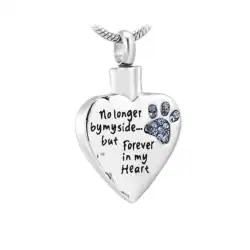
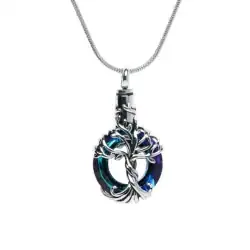
Cremation jewelry is worth mentioning here too. Sterling silver paw print pendants, heart-shaped keepsakes, and similar pieces hold a small portion of ashes and let a family member keep something close. These aren't a replacement for a full urn — they're usually meant to complement one, especially when multiple people in the family want something tangible.
The range in price is wide. Ceramic urns typically run between $95 and $290. Memorial jewelry starts around $135 and goes up from there. What matters isn't the price — it's whether the piece feels like it belongs to your dog. That's the bar worth measuring against.
Pet Ashes: Storage, Scattering, and What Harris County Families Usually Ask
Once you have the ashes, a new set of questions tends to come up. Is it okay to keep them at home? How long do they last? Can you scatter them somewhere meaningful? These are normal questions, and they don't have a single right answer — just options worth knowing about.
Pet ashes are chemically stable. Kept in a sealed urn and stored away from extreme moisture or heat, they can last indefinitely. There's no health concern with keeping them at home, and no evidence that doing so carries any kind of negative energy, despite what some people worry about. Plenty of families keep a dog's ashes on a mantle, a bookshelf, or a quiet corner of a room for years — and find real comfort in it.
Scattering is another path, and it's one that resonates with a lot of Harris County families specifically.
Where Harris County Families Scatter Pet Ashes — and What to Know First
Harris County is a big place, and the geography here gives families real options. Galveston Beach is about 50 miles south of Houston and is one of the more common choices — water scattering feels meaningful to a lot of people, and the Gulf Coast carries its own kind of weight. Buffalo Bayou, Hermann Park, and neighborhood dog parks across Houston are places where many dogs spent their happiest days, which makes them natural choices for families who want the scattering location to mean something.
There are a few practical things to keep in mind. Most public parks — including city parks in Houston — technically require permission for ash scattering, though enforcement is rare for small, private ceremonies. Private property obviously requires the landowner's consent. Water scattering in the Gulf of Mexico falls under federal EPA guidelines, which require the scattering to happen at least three nautical miles from shore. It's worth doing a quick check before you go, just so the experience isn't interrupted by uncertainty.
If you're not ready to scatter the ashes right away, that's completely fine. Many families keep the ashes in an urn for months or even years before deciding. There's no timeline you're obligated to follow. Some people eventually split the ashes — keeping a portion in an urn at home and scattering the rest at a meaningful location. Keepsake urns and small memorial pendants make that kind of division easy to manage without feeling like you're diminishing anything.
What we'd encourage is this: don't make the scattering decision under pressure. Let it come when it feels right. The ashes will keep. The moment doesn't have to be rushed.
Cat Urns for Ashes: What's Different and What's the Same
If you're here because you lost a cat — or because you have both cats and dogs and you're trying to understand your options — this section is for you. The good news is that most of what applies to dog urns applies to cat urns too. The sizing formula remains the same: one pound of body weight per cubic inch of urn capacity.
The practical difference is that cats are generally smaller. Most cats fall between 8 and 15 pounds, which means a cat urn in the 10 to 25 cubic inch range is usually appropriate. That's the small end of the dog urn spectrum — and it's worth noting, because some families accidentally purchase an urn that's far too large and then feel unsettled by all the empty space inside.
Design-wise, cat urns often feature feline-specific motifs — silhouettes, paw prints, or artistic shapes that feel more tailored than a generic memorial container. If you have a multi-pet household and you're thinking about how to honor more than one animal over time, we're happy to talk through what options are available and how to keep things organized. We've helped plenty of Harris County families navigate exactly that situation.
One thing we hear occasionally is that people feel like cat loss is somehow "less" than dog loss — that it doesn't warrant the same level of memorial consideration. That's not a view we share. The bond is the bond. Whether your companion was 8 pounds or 80, they mattered. The memorial should reflect that, whatever form it takes.
Choosing a Pet Urn in Harris County, TX: What to Remember
There's no perfect urn. There's only the one that feels right for your dog, your family, and the space you're in right now. Get the size right first — that's the one decision that's hardest to undo. After that, let the material, the design, and the personalization reflect who your dog actually was.
If you're still figuring out the cremation side of things, that decision matters too. How your dog is cared for before the ashes come home shapes how you feel about everything that follows — including the urn. Fast turnaround, individual cremation, real transparency about the process — these things aren't small details.
We've been serving families across Harris County since 1989. If you have questions about memorial options, urn selection, or what to expect from the cremation process, we're here — seven days a week, and always willing to talk it through before you make any decisions.